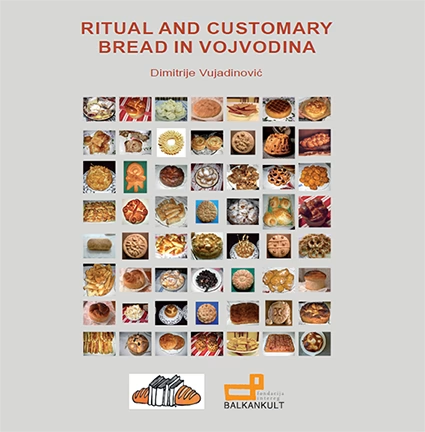
Part anthropological study and part culinary treasure trove, Dimitrije Vujadinović’s exploration of Vojvodina’s rich bread culture is an invaluable, multi-layered masterpiece. The book captures the region’s intangible cultural heritage at a critical moment, documenting traditions that are slowly fading in the face of modern industrialization, a poignant reality the author beautifully highlights in the description of salčići. By preserving these specific names, rituals, and folklore, Vujadinović safeguards the very heartbeat and collective memory of the region.
What makes this work exceptional is how it maps the unique cultural tapestry of Vojvodina. Within a remarkably compact geographic area, the lives and traditions of Serbs, Hungarians, Romanians, Slovaks, Rusyns, Bunjevci, Germans, and Jews are deeply intertwined. It is fascinating to observe how these diverse communities share identical culinary techniques such as steaming dough for Slovak pagle and Rusyn bobaljke, or using komlov (a natural yeast starter) across both Romanian and Slovak homes while still maintaining their distinct religious and secular symbols.
The text beautifully illustrates that in local folklore, bread is far more than mere sustenance; it possesses a soul and a profound symbolic language.
One of the most moving anthropological insights is that the exact same loaves such as the noćna pogača or the Slovak braided cake are baked for both weddings and funerals. This demonstrates that bread is the ultimate thread connecting every major milestone of human life and reinforcing our bond with previous generations.
This is much more than a cookbook. It is a vital historical and sociological record that uses the universal language of bread to tell a compelling story of harmony, respect for religion, nature, and familial roots. Free download